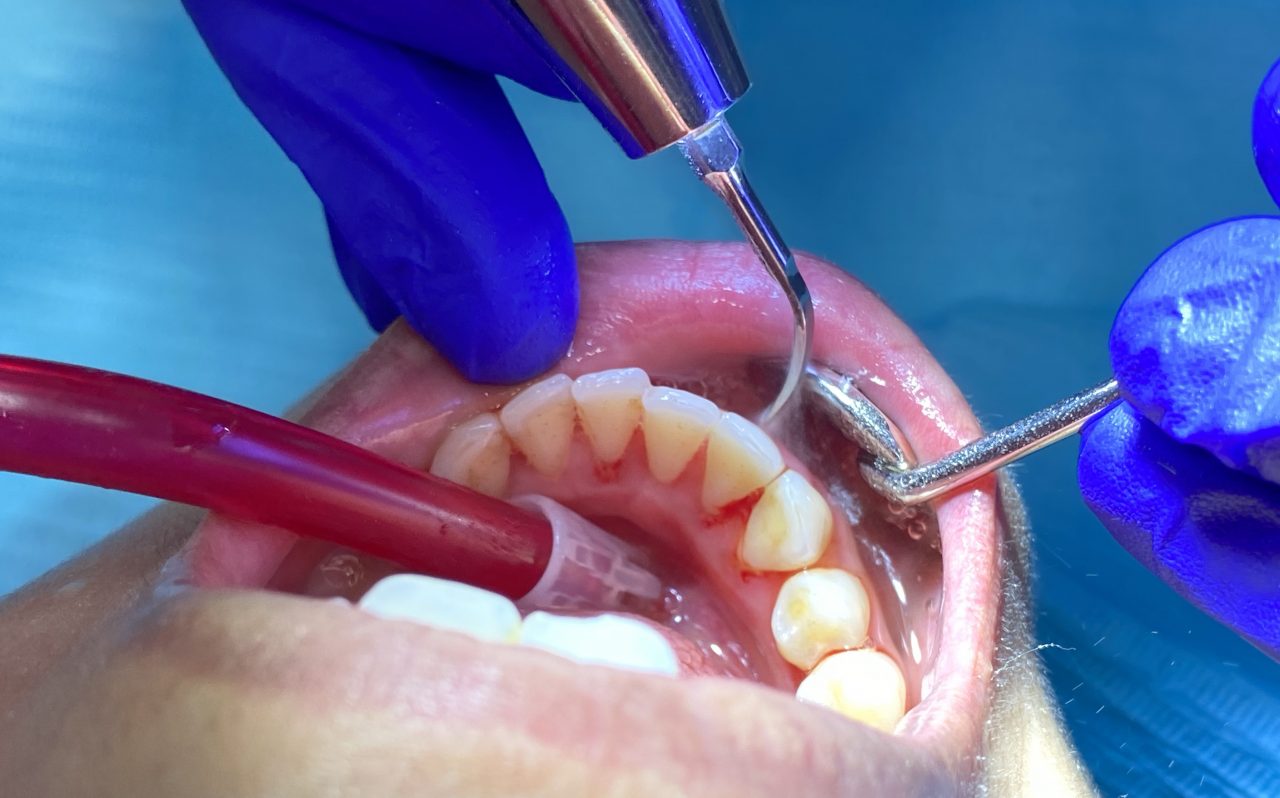
Retractia gingivala reprezinta o consecinta a bolii parodontale prin care gingia se retrage pana in punctul in care suprafata dintelui din cavitatea bucala este mult mai mare decat suprafata dintelui din maxilar. Astfel, dintii par mai mari in gura, iar sustinerea osoasa scade.
Cauze pentru retractia gingivala
Dezechilibru ocluzal (muscatura nu este echilibrata) din cauza faptului ca fortele masticatorii se transmit defectuos in axul dintilor. Dintii stiu sa suporte un numar de kg forta in axul lor. Retractia gingivala face ca asupra unui dinte sa actioneze o forta mai mare decat poate suporta radacina dintelui, acesta intrand in suferinta.
Dezechilibru ocluzal datorat lipsei dintilor. In aceasta situatie, dintii care inca au ramas prezenti pe arcade vor suporta o forta cel putin dubla fata de cat au fost creati sa suporte. Cea mai frecventa cauza pentru caderea dintilor o reprezinta patologia parodontala. In bolile parodontale avansate (parodontopatie marginala sau parodontoza cum este cunoscuta de pacienti), din cauza bacteriilor, initial apare inflamatia gingivala (edem, culoarea se modifica din roz in rosu sau violaceu, gingia isi pierde aspectul de gravura punctata si devine lucioasa). Apoi apare afectarea osoasa manifestata prin retractia osului sustinator al dintilor.
Simptomele pentru retractia gingivala
Indiferent de cauza care a dus la retractia gingivala si osoasa, la nivelul dintelui se observa:
Dintele incepe sa aiba o inaltime mai mare in cavitatea bucala si o lungime mai mica la nivelul maxilarului. In timp, acest fapt face ca dintele sa fie destabilizat si sa inceapa sa aiba mobilitate.
Inaltimea mai mare din cavitatea bucala este data de expunerea radacinii. Radacina nu are smalt pe suprafata, si astfel este expusa direct stimulilor din cavitatea orala: rece, dulce, presiune pe suprafata expusa. Acestea vor produce durere la nivelul dintelui.
Retractia gingivala face posibila ca vizibilitatea dintelui sa fie mai mare in cavitatea orala decat in maxilar. Astfel, se acumuleaza o tensiune de forte la nivelul suprafetei de unde se face trecerea dinspre dinte inspre radacina. Acolo, dimensiunea stratului smaltului este minima iar acest fapt duce la aparitia leziunilor de colet. Acestea reprezinta zone unde s-a pierdut din straturile dintelui. Aceste zone vor fi sensibile la stimuli termici si chimici. In plus, daca nu se elimina cauza, aceste leziuni se vor adanci pana la momentul la care vor ajunge la camera pulpara unde se regaseste nervul dintelui. Astfel, apare necesitea unui tratament de canal. Daca leziunea avanseaza, cresc sansele de fractura dentara.
Tratament retractie gingivala
In functie de cauza care a dus la retractia gingivala, tratamentul este diferit:
Daca problema o reprezinta un dezechilibru de forte transmise in axul dintilor, atunci se va monta un aparat dentar care sa indrepte dintii si sa corecteze muscatura astfel incat fortele sa fie direct proportionale cu capacitatea dintelui de a sustine presiunile.
Daca exista unul sau mai multi dinti lipsa, dintii care au ramas vor suporta si fortele celor care lipsesc. Astfel, ei vor fi supusi unor presiuni mari. Pentru a remedia aceasta situatie, se vor realiza lucrari protetice care sa inlocuiasca dintii lipsa. In functie de indicatia de tratament, se pot insera implanturi sau lucrari sustinute pe dintii limitrofi astfel incat sa se restabileasca un echilibru de forte.
Tratamentul in caz de parodontoza
Boala parodontala afecteaza tesuturile dentare de sustinere. Primul pas este sa fie afectata gingia, timp in care apare si retractia gingivala, apoi osul sustinator al dintelui. Tratamentul bolii parodontale este reprezentat de chiuretajul subgingival care se poate realiza in doua feluri:
manual cu ajutorul instrumentelor clasice;
printr-un protocol complex ce include laserul – acesta va elimina bacteriile si tesutul infectat de bacterii, permitandu-i gingiei sa se refaca, sa nu mai existe sangerare la periaj, sa isi recapete culoarea si textura si sa scada mobilitatea dentara.
Dupa eliminarea cauzei care a dus la retractie gingivala, exista mai multe solutii pentru a acoperi suprafata dintelui expusa:
acoperirea acesteia cu material compozit pentru a proteja dintele de stimulii termici si chimici din cavitatea bucala;
acoperirea dintelui cu o piesa protetica – acest lucru este indicat in eventualitatea in care dintele respectiv are si alte probleme ce necesita o solutie protetica;
acoperirea zonei dentare expuse cu o grefa de gingie. Aceasta varianta are adresabilitate mica.
Daca si tu suferi de retractie gingivala, nu ezita sa te programezi online sau telefonic prin apel la numarul +40.318.282.274, in oricare dintre cele 11 clinici din tara.