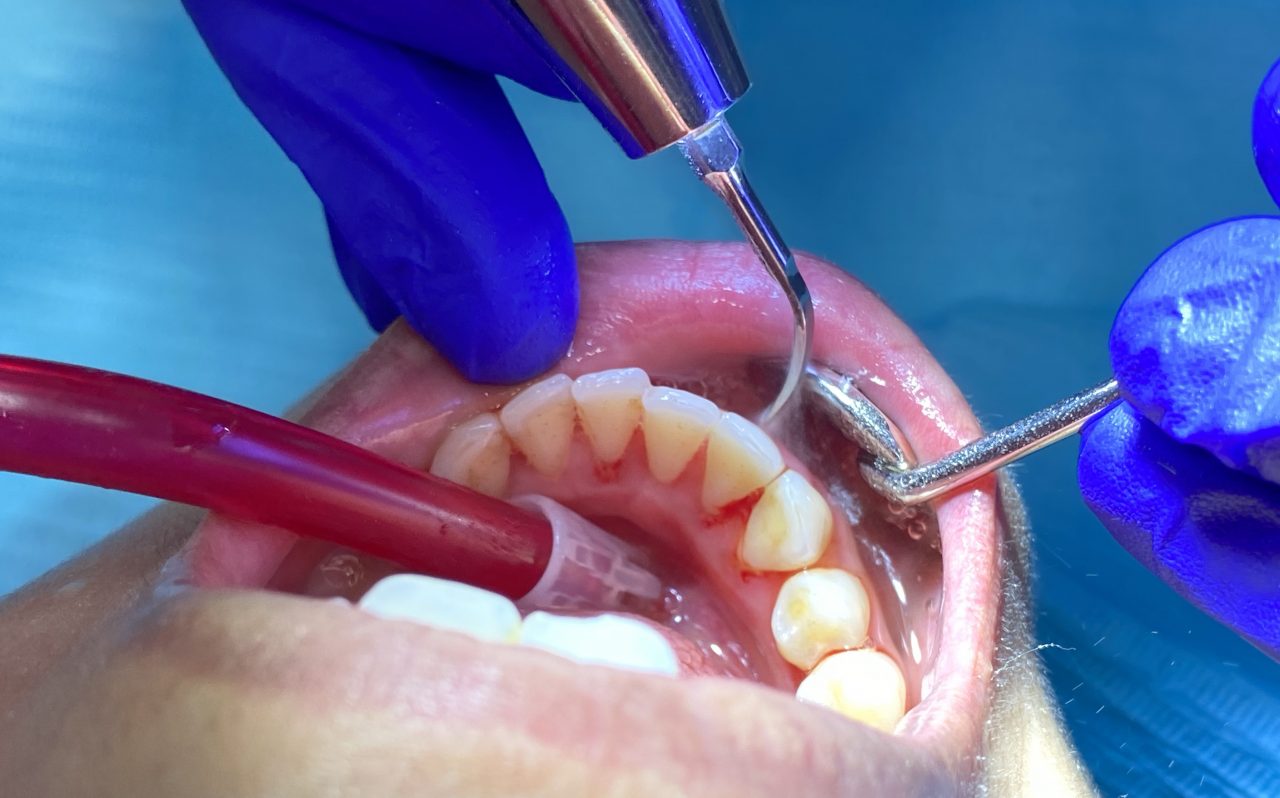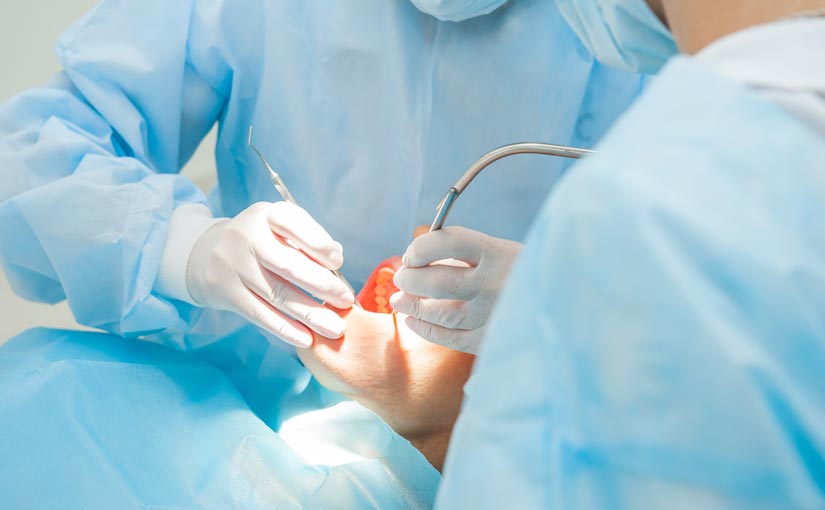

Operatia cu lambou este o procedura chirurgicala stomatologica folosita in tratamentul bolii parodontale avansate. Lamboul reprezinta fragmentul de mucoasa sau periost care se da la o parte de pe osul alveolar. In acest fel, un parodontolog are acces si vizibilitate buna la nivelul zonei afectate, pungile parodontale pot fi curatate si eventual, se pot corecta defectele sau deformarile osului alveolar, urmand ca la finalul procedurii chirurgicale sa se reaplice lamboul si sa se sutureze. Astfel, plaga este protejata si se obtine un aspect fizionomic si estetic al gingiei dupa vindecare.
In raport cu osul alveolar:
In functie de straturile care il formeaza:
Dupa pozitia in care este plasat lamboul la finalul interventiei:
Dupa gradul de extindere:
Pacientii care sufera de afectare parodontala pot alege operatia cu lambou, in functie de statusul parodontal si de indicatiile medicului specialist parodontolog. Este esential, ca inaintea stabilirii planului de tratament, sa fie efectuata o consultatie, pentru ca #LifeDentist-ul sa poata evalua corect gradul de afectare parodontala.
Operatia cu lambou poate fi realizata in urmatoarele cazuri:
Exista si cazuri in care operatia cu lambou este contraindicata, printre care se numara:
Atunci cand medicul specialist parodontolog recomanda o interventie chirurgicala de tipul operatiei cu lambou, comunicarea medic-pacient joaca rolul esential in informarea corecta a pacientului.
Operatia cu lambou poate fi realizata cu ajutorul a mai multe tehnici:
Consta in expunerea osului printr-o incizie la nivelul tesutului moale si a periostului. Accesul la nivelul osului ajuta la reconturarea si la regenerarea ulterioara. Medicul specialist va efectua o incizie la nivelul santului gingival, cativa mm de marginea gingivala, aceasta continuand spre creasta osului pana la nivelul varfului radacinii.
Este mult mai dificila, din cauza faptului ca sunt necesare mai multe incizii. Avantajul acestei tehnici este diminuarea traumei produse asupra tesuturilor, precum si aspectul mai estetic care se obtine postoperator. Initial, se realizeaza o incizie la 0,5 mm de creasta gingivala, vestibular, precum si la 1,5-2 mm pe partea orala. Cea de a doua incizie este verticala, in santul gingival, iar a treia este orizontala si elimina tesuturile dintre cele doua incizii initiale.
Implica o incizie la nivelul marginii gingiei libere care continua spre radacina dintelui, care continua dincolo de creasta alveolara.
Se indica in cazul prezentei de pungi parodontale supraosoase si pentru alungiri coronare. Aceasta tehnica se poate realiza pentru un maxim de 4 pana la 6 dinti in cadrul unei singure sedinte.
Se realizeaza in scopul asigurarii unei inchideri perfecte a plagii si stabilizarea cheagului. Operatia se indica pentru leziunile dintre radacinile molarilor mandibulari si intre radacinile vestibulare ale molarilor maxilari. Acesta implica fixarea unul bracket ortodontic de care se va suspenda firul de sutura la finalul interventiei chirurgicale.
Avantajele interventiei chirurgicale de tipul operatiei cu lambou pentru tratamentul parodontozei sunt:
De asemenea, operatia cu lambou presupune realizarea unei anestezii locale, urmand apoi incizia si decolarea tesutului gingival de pe dinti si de pe os. In urma unei interventii chirurgicale de tipul operatiei cu lambou, se pot aplica grefe de os si se pot realiza diferite procedee de regenerare tisulara. La finalul interventiei, gingia va fi repozitionata si sutura se va realiza cu fire neresorbabile. Intreaga procedura are o durata variabila, de la o ora, pana la trei ore.
Operatiile cu lambou fac parte din tratamentul chirugical al parodontozei, fiind manopere invazive care implica o durata mare a procedurilor de tratament, o recuperare grea iar riscul de aparitie al complicatiilor este foarte ridicat.
Riscurile unei operatii cu labou sunt:
Pentru a elimina riscul de aparitie a complicatiilor in urma efectuarii unei interventii chirurgicale de tipul operatiei cu lambou este esential ca pacientul sa urmeze intocmai recomandarile medicului specialist parodontolog, in scopul de a minimiza efectele secundare.
Pacientii care vin in clinicile noastre sunt sfatuiti sa renunte la factorii nocivi care au dus la aparitia bolii parodontale de la bun inceput (fumatul, alimentatia dezechilibrata) si sa intretina igiena orala atat acasa, cat si prin detartrajele si periajele la medicul specialist!
Intre consultatiile de rutina nu ar trebui sa treaca un interval mai mare de 6 luni, in scopul de a evalua statusul oral si de a efectua un pachet complet de igienizare profesionala.
Programeaza-te ACUM si beneficiaza de tratamentul parodontozei cu ajutorul specialistilor Life Dental Spa!
Mai Multe
articole
Ne poți suna in timpul programului (Luni-Vineri: 8:00-21:00 | Sâmbătă: 8:00-16:00) sau poți face o programare online.
2026 Toate drepturile rezervate - Life Dental Spa


Nu lăsa o durere de dinți neașteptată să îți strice concediul! Pune pe lista de bagaje și o vizită rapidă la Life Dental Spa.
Echipa noastră de medici folosește tehnologia laser pentru a rezolva orice problemă rapid, confortabil și fără stres.