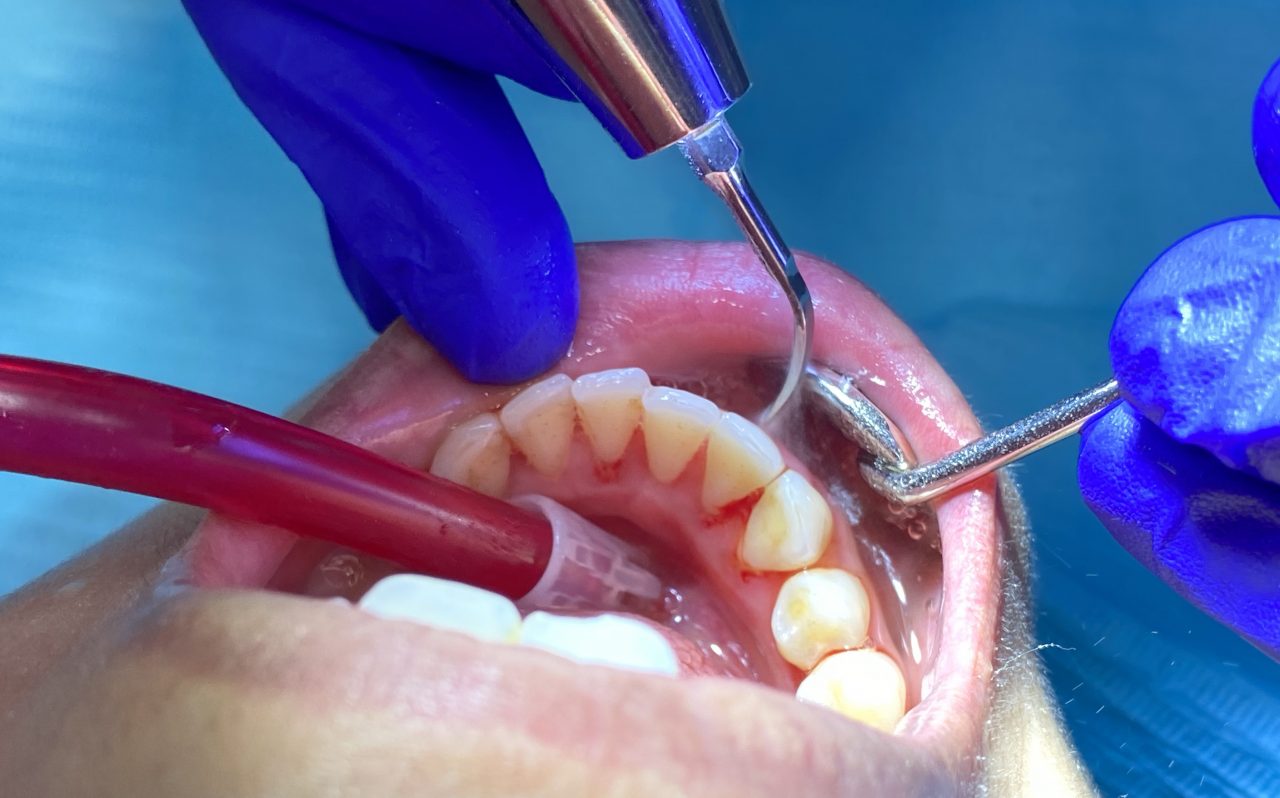
A dental abscess is a purulent collection that accumulates in the gum, bone or tooth. The abscess often occurs due to bacterial growth in the dental pulp. It requires medical intervention in the shortest possible time and is therefore considered a dental emergency. The clinical picture in case of dental abscess includes pain (localized or radiating pain - towards the maxillary sinus, ear, throat, with variable intensity), inflammation, swelling and the presence of purulent discharge, possible bleeding when brushing and the presence of bad smelling breath.
As an acute infection, it is possible that dental abscess to recede on its own. This can happen over time or if antibiotics and anti-inflammatory drugs are given and the inflamed area does not contain a very large amount of pus. When this happens it only resolves the discomfort, reduces the pain, it does not solve the problem itself. Through dental treatment of such a problem the area is disinfected and the cause is removed, not just temporarily solved.
In periapical abscess most often it occurs because of a carious process that has reached the nerve and has not been treated. The dental pulp becomes over-infected, the bacterial population grows and an infection appears behind the root tip. Left untreated, the infection grows and eventually an abscess appears next to the affected tooth. Through this abscess the pus evacuates directly into the oral cavity. In the case of a periodontal abscess, a periodontal pocket is formed which, if not properly sanitized, collects food debris and becomes infected.
Treatment for dental abscess differs depending on its type.
When the infection has been neglected for a long period of time, there is a possibility that the only possible treatment is the extraction of the tooth in question. The post-extraction wound will be cleaned and disinfected to eliminate any possibility of bacteria re-establishing and multiplying.
In the case of a periapical dental abscess, incision and drainage can also be performed when the purulent collection is delimited, but endodontic treatment must always be instituted to ensure the removal of infected tissues and sterilization with dental laser of the root canals and bone in the vicinity of the root tip of the tooth. If the tooth already shows a root canal treatment performed in the past, older than 3-6 months, the following procedure will be used endodontic retreatment (de-b obturation, cleaning and sterilization and root canal filling).
Periodontal dental abscess can occur in patients with chronic periodontal disease or independently of its presence. In patients with periodontal disease (diagnosed or previously undiagnosed), the acute infection is generated by bacteria from periodontal pockets that have formed around the teeth. It usually forms when a marginal closure of the periodontal pocket occurs, thus eliminating the drainage pathway and the accumulation of a collection of neutrophil cells and the formation of pus, which if unable to be drained will accelerate the evolution of the lesion and the rapid destruction of tissues that are not yet affected.
The emergency treatment involves draining the abscess by mechanically cleaning the contents of the periodontal pocket (microbial plaque, tartar, purulent secretion), performing washes with antiseptic substances specific for periodontal disease bacteria and using dental laser for the effect bactericidal effect on the bacteria in the periodontal pocket and those that have penetrated deep into the gingival tissue (the laser is the only way to kill the bacteria in the gingival tissue), anti-inflammatory and biostimulation.
It is very important for the patient to establish at home a rigorous hygiene routine and the use of auxiliary means such as rinsing the mouth with mouthwash with chlorhexidine digluconate 0.2%, but not more than 14 days.
In patients with periodontal dental abscess, but who do not suffer from periodontitis, the causes may be the presence of a foreign body in the gum line, or the presence of lesions at the level of the dental root such as cracks, fractures, root resorption. Treatment in these cases depends on the exact cause.
In the case of pericoronaritis the infected tissues are removed from the area and a curettage is performed, after which drug treatment is initiated. If this drug treatment has not been preceded by a mechanical cleaning of the area, then healing will be delayed. If recurrent episodes occur, the molar will be extracted. This will be done when the area is free of infection and inflammation. It is not recommended to extract the wisdom molar in acute inflammation, as there is a risk of spreading the infection to the surrounding tissues.
More
articles
2026 Toate drepturile rezervate - Life Dental Spa


Nu lăsa o durere de dinți neașteptată să îți strice concediul! Pune pe lista de bagaje și o vizită rapidă la Life Dental Spa.
Echipa noastră de medici folosește tehnologia laser pentru a rezolva orice problemă rapid, confortabil și fără stres.