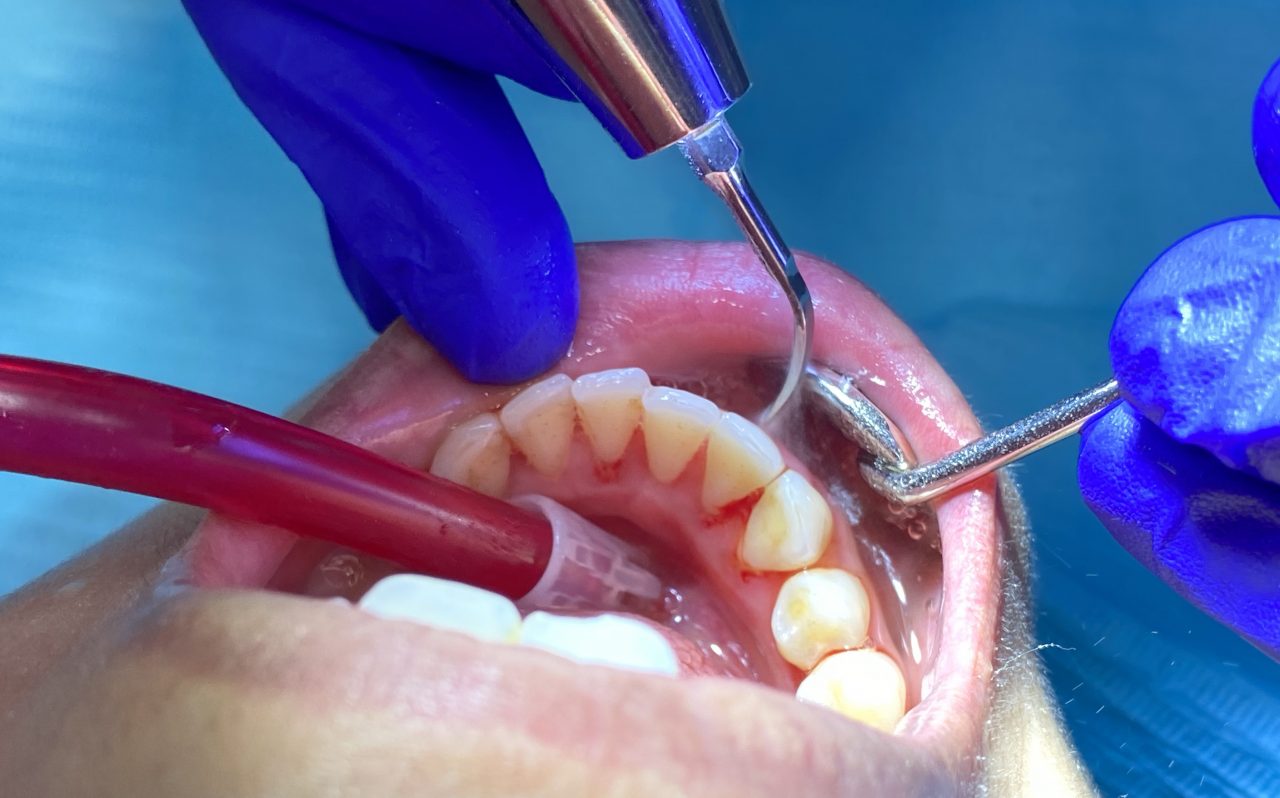
Ce este gingivita de sarcina?
Gingivita de sarcina apare atunci cand placa bacteriana se acumuleaza pe suprafetele dentare, iar aceste bacterii elibereaza niste produsi de metabolism care irita gingia. Daca esti insarcinata si ai gingia rosie, friabila, dureroasa si sangereaza usor la periaj, cel mai probabil ai gingivita. Aproximativ 60-70% dintre femei sufera de gingivita in timpul sarcinii.
De ce apare gingivita de sarcina?
- Modificarile hormonale, care fac tesuturile parodontale mult mai susceptibile la atacul bacteriilor;
- Scaderea debitului salivar;
- O dieta mai bogata in zahar;
- Refluxul acid si starile de voma;
- Este posibil sa capeti o intoleranta la aromele sau mirosul produselor de igienizare orala.
Pe timpul sarcinii este normal ca gingiile sa dezvolte o sensibilitate, insa daca aceasta are o culoare rosu aprins, este inflamata si sangereaza cu usurinta la periaj, este foarte posibil sa suferi de gingivita de sarcina, o stare de inflamatie a gingiei care imbraca o forma blanda si este relativ usor de mentinut sub control. Insa daca nu este tinuta sub control, gingivita poate deveni o problema mai serioasa denumita parodontita. Studiile arata ca parodontita netratata prezenta in timpul sarcinii poate duce la necesitatea ulterioara a tratamentelor chirurgicale sau extractiilor dentare, dar poate chiar sa te afecteze prin cresterea riscului de aparitie a unei nasteri premature.
Daca observi aparitia unei tumefieri la nivelul gingiei, care sangereaza atunci cand realizezi periajul dentar, consulta medicul stomatolog!
Poate fi o simpla afta sau poate fi vorba despre un granulom piogenic, sau asa zisa “tumora de sarcina”, o proliferare benigna si deloc periculoasa, care apare la aprox 5% dintre femei pe perioada sarcinii, care se poate sa si dispara de la sine dupa nastere, insa daca aceasta devine deranjanta, daca este usor de traumatizat in functia de masticatie sau daca impiedica o igienizare corecta a zonei respective, este recomandata excizia ei. Excizia se poate realiza clasic, cu bisturiul, sau mai nou poate fi indepartata folosind laserul dentar, chiar fara realizarea anesteziei, cu o sangerare minima si o vindecare accelerata. Este important sa stii ca desi ea se indeparteaza, pe perioada sarcinii, este posibil sa reapara si sa trebuiasca excizata din nou.
Cum previi gingivita de sarcina?
- Prezinta-te in cabinetul de stomatologie pentru controale periodice si igienizari profesionale. Studiile arata insa ca in perioada sarcinii pacientele evita sa se prezinte la dentist. Acest lucru are legatura si cu teama viitoarelor mamici legata de efectele pe care le-ar putea avea manoperele stomatologice asupra bebelusului lor, dar si eventualele senzatii de voma sau reflux acid care le pot pune in dificultate sa suporte instumentele necesare pentru a realiza o manopera stomatologica;
- Ai grija de dintii tai! Periajul dentar de doua ori pe zi, impreuna cu folosirea unui dus bucal sunt esentiale pentru a mentine o sanatate orala corecta si pentru a preveni gingivita de sarcina. Insa a fi constiincios in ceea ce priveste periajul nu inseamna a fi agresiv cu gingia, se recomanda a fi folosita o periuta de dinti cu filamente soft, cu miscari blande. Daca aroma de menta a pastei de dinti iti provoaca o senzatie de voma, o poti inlocui cu o pasta de dinti pentru copii, cu aroma de fructe;
- Curata-ti si limba, pentru scaderea incarcaturii microbiene;
- Folosirea unei ape de gura fara alcool;
- Atentie la alimentatie! Incearca sa eviti alimentele bogate in carbohidrati si zahar.
Daca ai in plan o eventuala sarcina in viitorul apropiat sau daca esti insarcinata, este absolut necesara o consultatie la medicul stomatolog, pentru a evalua statusul dentar si a stabili daca este necesar a fi realizat vreun tratament stomatologic inainte de a ramane insarcinata sau pe timpul sarcinii, daca e cazul. Cu o supraveghere atenta a starii de sanatate a parodontiului, poti reduce considerabil riscul sa apara gingivita de sarcina.
In aceasta perioada minunata a vietii, aminteste-ti ca ingrijirea orala va merita in final tot efortul si in plus, pe viitor, va fi un exemplu pozitiv pentru bebelusul tau!