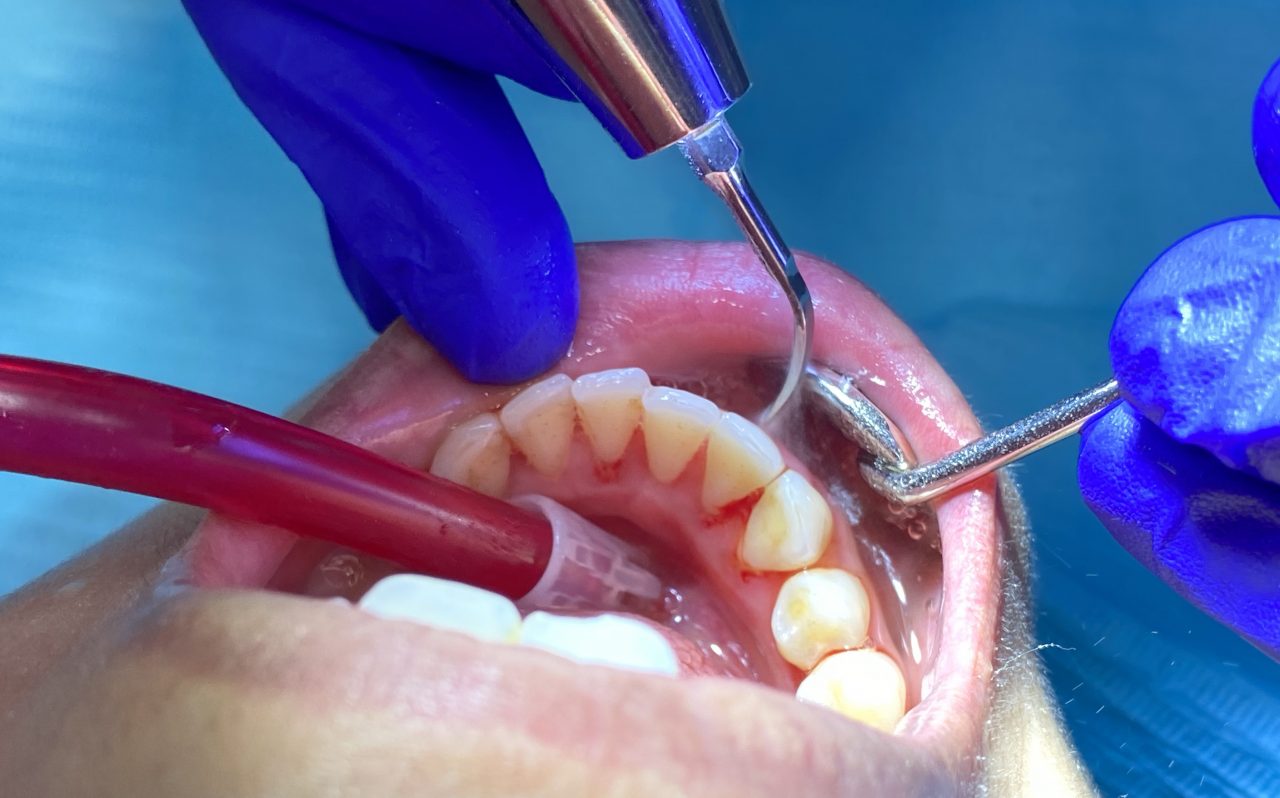
Sarcina aduce dupa sine schimbari atat la nivel corporal, cat si psihic. De asemenea, acestea apar chiar si la nivelul cavitatii bucale. Este foarte important sa stim cu ce afectiuni dentare se poate confrunta o femeie insarcinata, dar si o proaspata mamica. In functie de acestea, aceasta va primi tratamente stomatologice care sa o ajute sa le depaseasca.
Multe femei cred inca in mitul conform caruia, in sarcina, mama pierde un dinte sau ca bebelusul inca nenascut „fura” calciul mamei. O femeie care isi doreste o sarcina isi face un set de analize inainte. Din pacate, majoritatea ginecologilor, nu o directioneaza si catre un medic stomatolog pentru a i se trata si problemele dentare. Acest lucru ar trebuie sa fie inclus in pachetul de screening prenatal.
Problemele dentare netratate, indiferent de natura lor, pot provoca nastere prematura, dar si probleme de sanatate pentru bebelus. De aceea, este extrem de important sa se efectueze tratamente stomatologice atat inainte, in timpul, cat si dupa sarcina. De asemenea, bacteriile raspunzatoare de aparitia cariei dentare si a bolilor parodontale se transmit usor de la mama la copil. Problemele dentare se pot agrava in timpul sarcinii, fie pentru ca se evita tratarea lor in stadiu incipient, fie din cauza modificarilor hormonale. Exista studii care arata ca imunitatea unei femei insarcinate este scazuta, din aceasta cauza si apar problemele dentare in timpul sarcinii. Mai jos, iti prezentam cele mai comune probleme dentare care pot aparea in timpul sarcinii.
Gingivita de sarcina
Este una dintre cele mai comune, despre care s-au scris nenumarate articole. Ea apare ca urmare a unei cantitati mari de hormon estrogen, care determina inrosirea si umflarea gingiilor, lucru ce conduce la un periaj mai dificil, acumularea unei cantitati mari de placa bacteriana si tartru, precum si transformarea intr-o gingivita de cauza bacteriana. Sarcina nu este vinovata de aparitia gingivitei/parodontopatiilor marginale, dar face ca gingiile sa fie mai sensibile atacului bacteriologic.
Mobilitatea dentara
Cauza din care apare mobilitatea dentara este legata tot cantitatea mare de hormoni estrogeni, care determina o slabire a ligamentelor parodontale. Este tranzitorie si, dupa nastere, lucrurile revin la normal.
Carii dentare
Greata si senzatia de voma care pot fi accentuate de pasta de dinti, mai ales in primul trimestru de sarcina. Din cauza varsaturilor dese, pot aparea demineralizari la nivelul dintilor care se transforma foarte usor in eroziuni sau carii. Dupa varsaturi, este indicat sa ne spalam pe dinti la 20 minute. Neputinta igienei dentare conduce la agravarea sau aparitia altor probleme dentare.
Este recomandat sa se foloseasca o pasta de dinti fara gust si miros, dar si fara fluor. De asemenea, din cauza apetitului ridicat de alimente dulci, pot aparea carii sau se pot agrava cele deja existente. Din cauza cariilor profunde, poate aparea durerea de masea sau infectia dentara.
Modificarea calitatii si cantitatii salivei
Xerostomia, adica uscaciunea gurii, apare mai ales in primul si al treilea trimestru de sarcina. Sialoree – productie mare a salivei, care poate conduce la o acumulare foarte mare a placii bacteriene si, implicit, a tartrului. Modificarea salivei conduce la o acumulare mai rapida si intr-o cantitate mai mare a placii bacteriene.
Afte bucale (stomatita aftoasa)
Aftele bucale sunt mici ulceratii, care apar mai ales in interiorul obrazului si a buzei, pe limba. Determina o senzatie de arsura si durere. Tratamentul este strict legat de ameliorarea simptomatologiei, ele trec de la sine in maximum doua saptamani. Ele apar tot ca urmare a unei imunitati scazute. Pot fi evitate cu ajutorul unei igiene dentare foarte minutioase, alimentatiei sanatoase, renuntarii la fumat.
Halena (halitoza)
Halena (respiratie neplacuta) poate aparea ca urmare a unei cantitati mari de placa bacteriana sau a unor carii profunde. Poate fi si din cauza respiratiei orale sau a unor probleme sinuzale. Respiratia pe gura conduce la uscarea mucoaselor si dezvoltarea unui mediu propice pentru dezvoltarea bacteriilor.
Cum previi aparitia afectiunilor dentare in sarcina
- Mentine o igiena bucala riguroasa care sa includa: ata dentara, periuta + pasta, dusul bucal si apa de gura, plus razusa de limba;
- Incearca sa ai o alimentatie sanatoasa si echilibrata, bazata pe fructe si legume;
- Renunta la fumat si bauturi carbogazoase;
- Mergi la control regulat pe perioada sarcinii si dupa;
- Mergi la detartraje regulate, o data la 6 luni sau mai des, la recomandarea medicului;
- Rezolva problemele dentare inainte de sarcina.