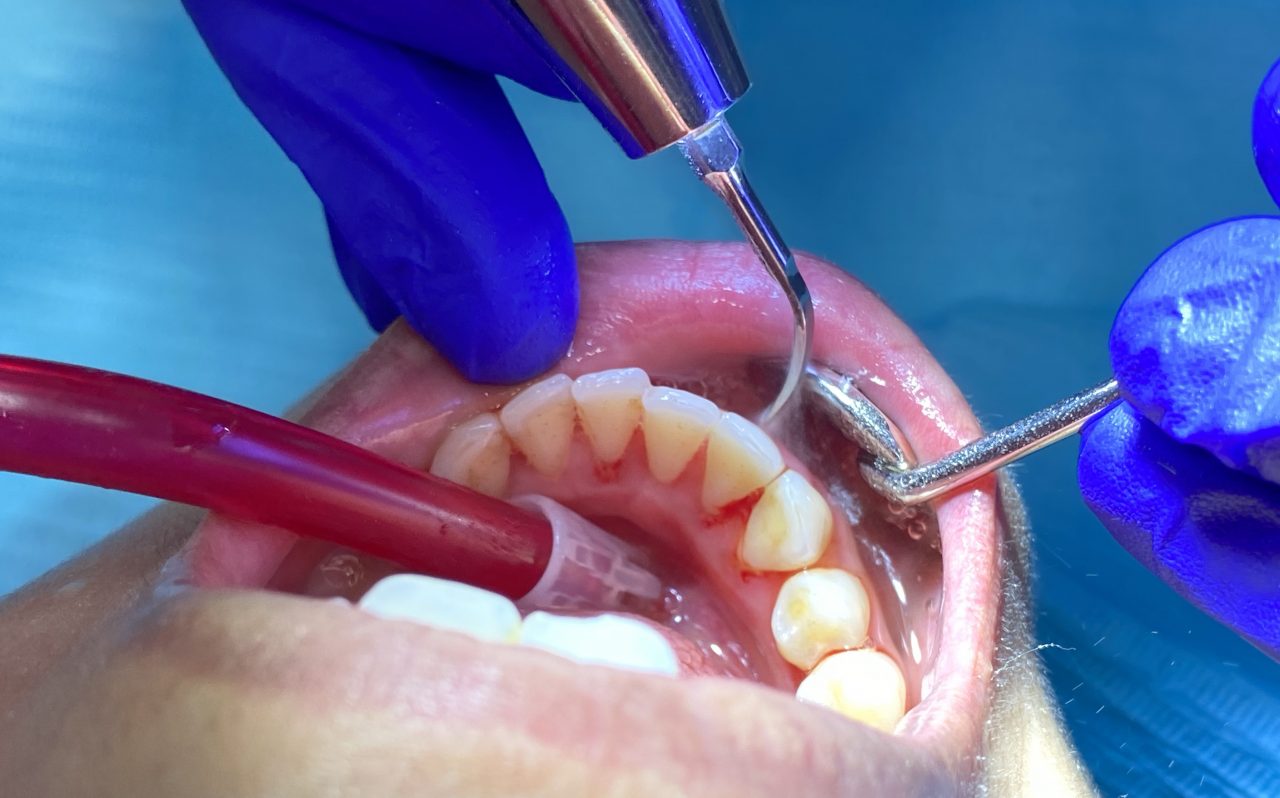
Atunci cand parodontoza este depistata tarziu, acest lucru implica extractia unor dinti irecuperabili. Acestia pot fi ulteriori inlocuiti cu implanturi dentare, dar este foarte important sa ne asiguram ca pacientul primeste un tratament pentru parodontoza inainte de inserarea acestora.
Implantul dentar este un dispozitiv din titan sau zirconiu, sub forma unui surub, care se introduce in osul maxilar pentru a inlocui unul sau mai multi dinti. De obicei, implanturile dentare vor sustine o lucrare protetica care, in functie de situatia clinica, poate fi reprezentata de o coroana dentara sau o punte dentara.
Niciodata implantul dentar nu se insera inaintea efectuarii unui tratament pentru parodontoza, intrucat bacteriile parodontopatogene vinovate de instalarea bolii parodontale sunt implicate si in aparitia afectiunilor periimplantare. Netratarea afectiunii inainte de inserarea implantului dentar, poate duce la compromiterea acestuia, cu pierderea lui, periimplantita fiind cea mai frecventa cauza a esecului tratamentului prin implanturi dentare.
Asa cum in jurul dintilor poate aparea gingivita, in jurul implanturilor dentare pot aparea afectiuni ce presupun si resorbtia osului alveolar din jurul dintilor, cum ar fi mucozita si periimplantita.
Mucozita este o manifestare clinica ce se caracterizeaza prin modificari inflamatorii doar la nivelul mucoasei periimplantare. Este un proces reversibil si asemenea gingivitei, tratata corespunzator, nu va degenera in periimplantita. Totusi, ca sa evitam instalarea acestei afectiuni, cel mai indicat este sa efectuam un tratament pentru parodontoza pentru a asigura eliminarea bacteriilor parodontopatogene.
Periimplantita este procesul inflamator distructiv care afecteaza gingia si osul din jurul implanturilor dentare. Din pacate, ca si parodontita marginala, periimplantita si faza sa incipienta, mucozita, sunt initial asimptomatice. Deseori, periimplantita este descoperita de catre medicul stomatolog in timpul consultatiei, asa ca este foarte important si pentru purtatorii de implanturi sa mearga regulat la medicul stomatolog pentru controalele periodice.
Simptomele bolii periimplantare sunt:
Desi mucozita si periimplantita pot fi tratate (tratamentul fiind mai simplu sau mai complex in functie de cat de avansata este boala), cel mai bun tratament este intotdeauna preventia. Este foarte important ca pacientul care va primi implanturi dentare sa aiba o igiena orala foarte buna atat inainte cat si dupa inserarea implanturilor.
Atunci cand medicul stomatolog sau specialistul parodontolog va indica faptul ca exista o inflamatie cronica la nivelul gingiei (gingivita) sau, mai rau, o parodontita marginala cu prezenta pungilor parodontale, este absolut vital ca inaintea interventiei sa se realizeze o decontaminare totala si eficienta a cavitatii bucale, cu ajutorul tratamentului parodontal.
Un tratament pentru parodontoza poate presupune decontaminarea cu laserul a cavitatii orale, chiuretajul subgingival asistat laser sau uneori poate chiar chiuretajul parodontal in camp deschis, in functie de cat de avansata este boala parodontala. Laserul este un element foarte important in aceasta ecuatie intrucat prin efectul bactericid si antiinflamator realizeaza acea decontaminare care nu poate fi realizata doar prin tratamentul mecanic clasic sau prin tratamentul chimic (ce presupune folosirea unor substante antiseptice si dezinfectante).
Dupa inserarea implanturilor, lipsa igienei orale, insotita de acumulare de placa bacteriana care nu este indepartata curand, va duce la mineralizarea acesteia si transformarea in tartru dentar. Placa bacteriana si tartrul sunt factorii principali implicati in procesul de inflamare a gingiei. Niciodata nu trebuie sa ne gandim ca daca suntem purtatorii unui implant dentar acesta trebuie neglijat, ci trebuie sa ii oferim un grad de atentie asemanator cu cea oferita dintilor naturali. Si pe suprafata implantului si a coroanei dentare artificiale se pot acumula placa bacteriana si tartru dentar.
Periajul dentar impreuna cu folosirea unui dus bucal si clatirea cu apa de gura cu substante antiseptice sunt suficiente pentru intretinerea implanturilor si mentinerea sanatatii orale.
Foarte importante sunt vizitele regulate la stomatolog, o data la cateva luni, in functie de ce perioada care ti-a fost indicata, astfel incat sa poata fi analizate aspectele clinice si radiologice si orice problema sa fie identificata intr-o etapa cat mai precoce atunci cand si rezolvarea ei este mai usoara.
Daca ai nevoie de implanturi dentare dar si de tratament pentru parodontoza, poti efectua o programare online sau telefonica la numarul +40.318.282.274
Mai Multe
articole
Ne poți suna in timpul programului (Luni-Vineri: 8:00-21:00 | Sâmbătă: 8:00-16:00) sau poți face o programare online.
2026 Toate drepturile rezervate - Life Dental Spa


Nu lăsa o durere de dinți neașteptată să îți strice concediul! Pune pe lista de bagaje și o vizită rapidă la Life Dental Spa.
Echipa noastră de medici folosește tehnologia laser pentru a rezolva orice problemă rapid, confortabil și fără stres.