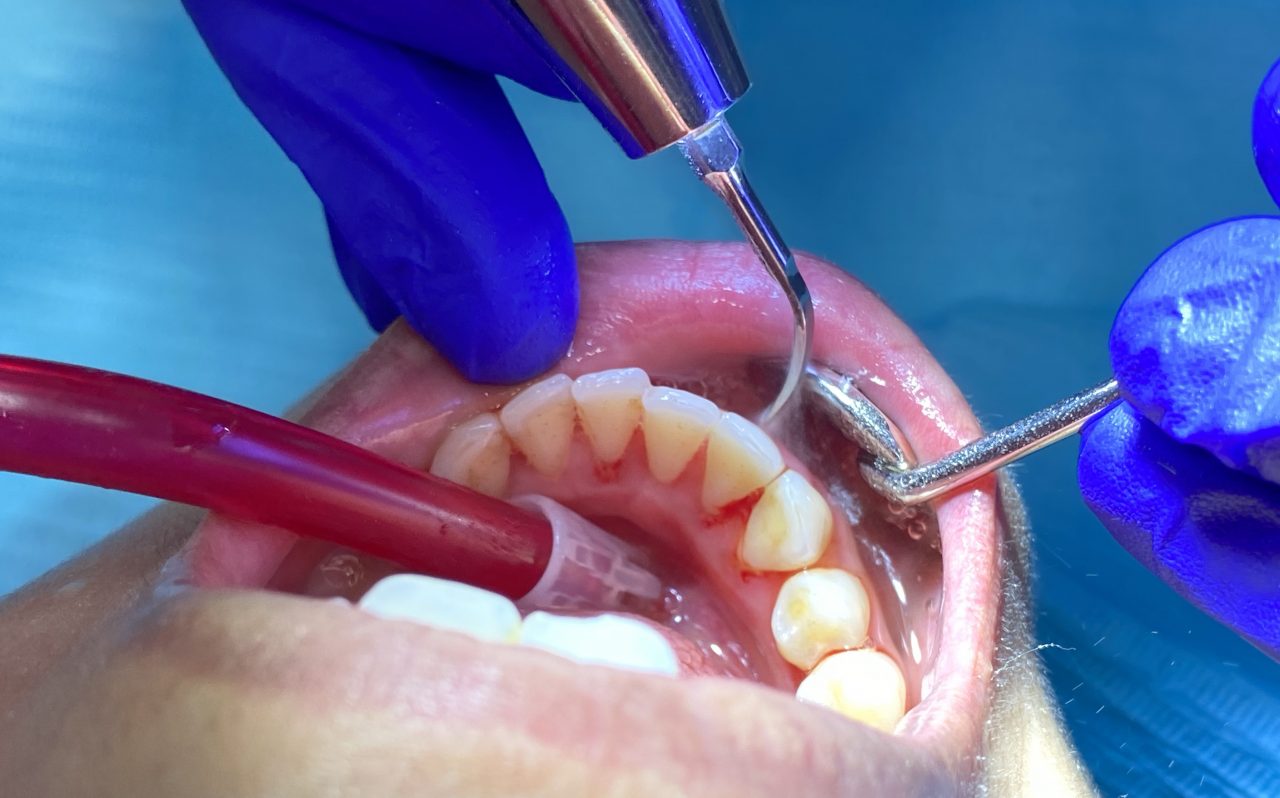
Un medic parodontolog reprezinta un medic dentist care a studiat intensiv parodontologie – ramura a stomatologiei care este axata pe structura de suport a dintilor. Medicul parodontolog este astfel specializat in diagnosticarea corecta a afectiunilor parodontale (ex: parodontoza sau gingivita), in conceperea si implementarea unui plan de tratament complex dar si in structurarea unor programe de preventie, individualizate dupa nevoile fiecarui pacient in parte.
Structura de suport a dintilor poarta denumirea in parodontologie de „parodontiu” si este alcatuit din: os alveolar, ligamente parodontale, structura de invelis a radacinii (cement) si gingie.
- GINGIA – in mod normal, culoarea acesteia trebuie sa fie roz iar consistenta ei trebuie sa fie ferma, atasata de dinte. Aceasta acopera si protejeaza suprafata radacinii si osul alveolar. Gingia situata intre doi dinti vecini se numeste gingie interdentara sau papila interdentara. In mod normal, aceasta trebuie sa umple tot spatiul situat sub punctul de contact si sa aiba o forma triunghiulara. Rolul ei este acela de a preveni impactul agresiv al alimentelor in timpul masticatiei. Absenta gingiei interdentare indica debutul sau avansarea unei afectiuni parodontale.
- OSUL ALVEOLAR – Osul alveolar este situat in structura a oaselor maxilare – superioara si inferioara – care se numeste „proces alveolar”. Alveola este compartimentul osos care sustine radacina dintelui, o continuare osoasa a mandibulei sau maxilarului care formeaza o cavitate conica. Acest os se formeaza odata cu dintele, il sustine si dispare cand se pierde.
- CEMENTUL – reprezinta stratul exterior al radacinii dintelui. Acesta acopera dentina si serveste drept zona de atasament pentru fibrele de colagen din ligamentul parodontal. Are o duritate mult mai scazuta fata de smalt iar culoarea este una galbuie. Din acest motiv, atunci cand exista o retractie a gingiei si este expusa radacina, efectul inestetic este marcat: se vede o delimitare clara intre suprafata alba si neteda a smaltului si suprafata galbuie si usor neregulata a cementului. Cu cat este detectata mai repede cauza retractiei gingivale si cu cat este instaurat mai rapid un tratament corect, cu atat putem sa prezervam mai mult tesut dentar si putem evita efectele inestetice neplacute.
- LIGAMENTUL PARODONTAL – ancoreaza dintele in alveola dentara si diminueaza fortele externe ce se exercita asupra lui. Acesta este reprezentat de un tesut conjunctiv dens, ordonat, bine vascularizat, ce realizeaza conexiuni puternice intre procesele alveolare si cement.
Desi preventia este cheia mentinerii unei structuri parodontale sanatoase, in cazul in care se instaleaza o afectiune la nivelul ei, medicul specializat in parodontologie este cel care poate sa actioneze rapid si sa salveze structurile dentare descrise mai sus, salvand in acest fel si dintii. Atunci cand afectiunea gingiilor este una superficiala, tratamentul este unul simplu, reprezentat de cele mai multe ori de o curatare corecta in cabinetul dentar si de o decontaminare si ajutorul laserului. Daca bacteriile au patruns profund in pungile parodontale si au distrus tesutul osos, gingival sau ligamentare, un tratament mai complex este necesar (de exemplu parodontite agresive, parodontite cronice, parodontite ca manifestari sistemice, necrotice, abcese, etc). Medicul specializat in parodontologie poate efectua in acest caz diferite manopere care au ca scop indepartarea bacteriilor, curatarea si planarea suprafetelor radiculara sau regenerarea tisulara. Cu cat pacientul se prezinta mai repede la medicii este instaurat un tratament corect si complet, se reduce riscul de a pierde din structurile de suport ale dintilor.
Avand astazi la dispozitie tehnologie de ultima generatie cum ar fi aparate laser, tehnologie prgf, terapia durerii si microinstrumente pentru planarea suprefetelor radiculare, confortul pacientului este sporit in timpul sedintelor la medicul dentist, rezultatele sunt mai predictibile si sansele de recidiva sunt mult mai scazute.
Daca doresti si tu sa afli mai multe informatii despre cum sa previi sau sa tratezi gingivita sau parodontoza, nu ezita sa te programezi online si sa discuti cu unul dintre medicii nostri specializati in parodontologie.