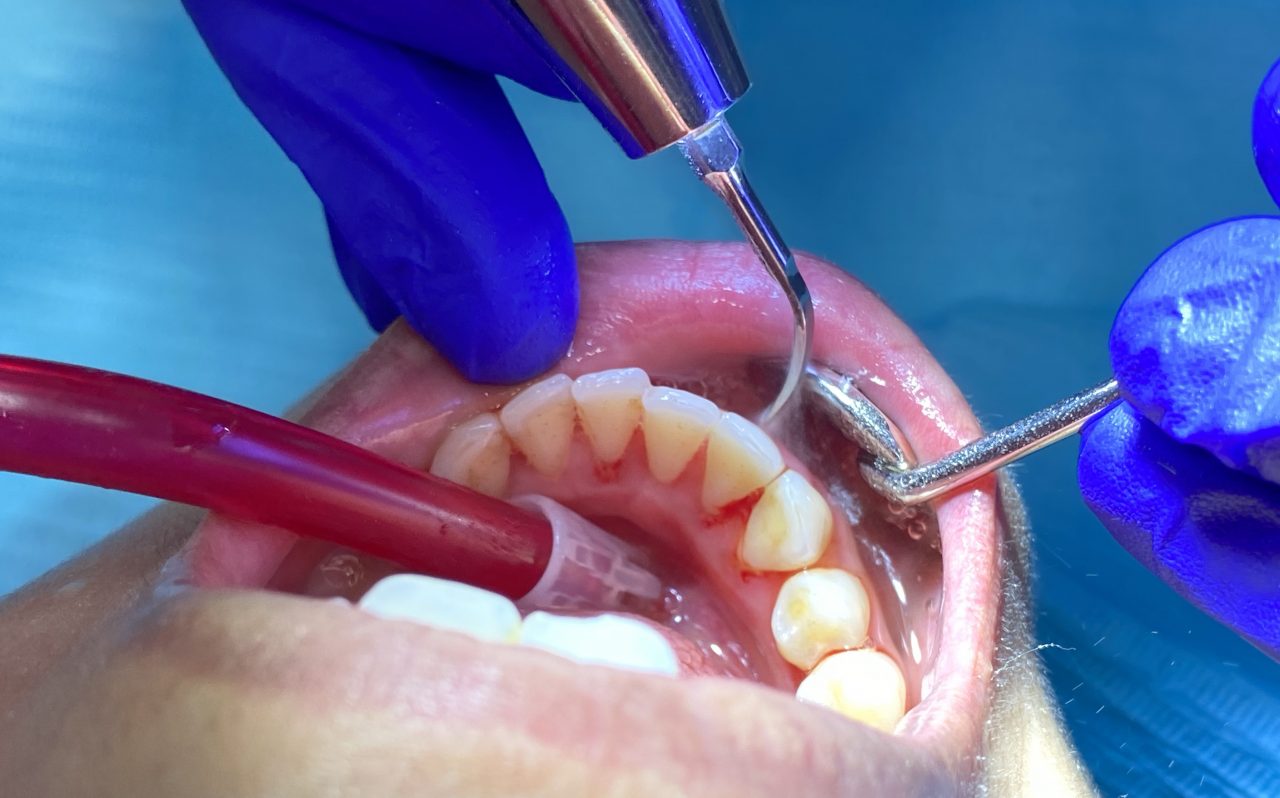
Implantul dentar este o solutie terapeutica prin care se inlocuieste un dinte irecuperabil sau care reface integritatea arcadelor dentare partial sau total edentate. Implantul dentar este o tehnica larg utilizata, sigura si predictibila, asigurand o functionalitate buna. Planificarea pentru o operatie de implant dentar trebuie sa fie efectuata cat mai corect pentru a fi cat mai simpla, atraumatica si bine tolerata de catre pacienti.
Factorii care influenteaza gradul de durere la o operatie de implant dentar
- Tipul si cat dureaza operatia de implant dentar
- Statusul general al pacientului
- Pragul de tolerabilitate al fiecarui pacient
1. Tipul si durata pentru o operatie de implant dentar
Majoritatea interventiilor de inserare a implanturilor dentare presupun o tehnica simpla si rapida care se efectueaza sub anestezie locala, fara sa existe durere sau disconfort. Exista insa anumite cazuri in care este nevoie de interventii aditionale, in functie de situatia pacientului:
- Operatia de inserare a bonturilor
Se poate asocia si cu alte interventii chirurgicale, crescand astfel timpul si durata actului operator.
Reprezinta tehnica de adaugare de material osos sub forma de granule de mici dimensiuni sau blocuri osoase sub forma de conformatoare care permit inserarea implanturilor osoase in siguranta atunci cand nu exista os natural suficient. Atunci cand aceasta tehnica este folosita, durata pentru o operatie de implant dentar creste implicit, iar recuperarea postoperatorie poate fi ingreunata.
Este o manopera de ridicare a membranei sinusului pentru a permite inserarea implanturilor in siguranta atunci cand nu este spatiu suficient pana la aceasta, riscand sa se perforeze. De obicei atunci cand se foloseste tehnica de sinus lift, este necesar sa se adauge si material osos sub forma de granule pentru a creste inaltimea osoasa si pentru a departa membrana sinusului fata de varful implantului. Aceasta interventie prezinta o complexitate crescuta si o durata mai mare, iar tehnica poate prezenta o recuperare mai ingreunata dupa o operatie de implant dentar, fiind dependenta de factori externi dar si de statusul general al fiecarui pacient.
Este o interventie chirurgicala complexa care presupune extractiile dintilor irecuperabili, regularizarea crestei alveolare postextractionale si inserarea de implanturi dentare pentru a realiza o lucrare provizorie imediat postoperator. Aceasta tehnica necesita o analgezie eficienta fiind adesea necesara si sedarea pacientului pentru a nu se confrunta cu fenomene dureroase.
2. Statusul general al pacientului
In anumite situatii starea generala a pacientilor impune folosirea unor tehnici adecvate de analgo-sedare in vederea controlului durerii si pentru a spori actul operator. Pacientii care sunt anxiosi, sau care urmeaza sa aiba o operatie de implant dentar mai complexa, pot beneficia de sedare alaturi de anestezie locala pentru un confort sporit si o e eficienta crescuta a actului operator.
3. Gradul de tolerabilitate al fiecarui pacient
Fiecare pacient percepe senzatia dureroasa in mod subiectiv, de aceea trebuie sa se discute inainte cu acesta pentru a stabili de comun acord care tehnica de anestezie este cea mai potrivita. Medicul este cel mai in masura sa sfatuiasca pacientul care este cea mai buna atitudine privind tehnicile de anestezie, deoarece acesta poate estima daca o anestezie locala este suficienta pentru actul operator pe care il va efectua.
Recuperarea postoperatorie
Aceasta presupune o serie de procese fiziologice care pot sa apara frecvent dupa o operatie de implant dentar si pregatesc organismul pentru integrarea acestuia. In oricare din situatiile prezentate, pacientul este rugat sa ia legatura cu medicul curant pentru a evalua situatia si pentru a sfatui pacientul in legatura cu ce trebuie sa faca.
Acestea presupun:
- jena sau sensibilitate la nivelul zonei operatorii;
- edem local sau umflatura care trece in cateva zile, compresele reci grabind recuperarea;
- echimoze care se vindeca in 5-7 zile.
De obicei, pacientul primeste urmatoarele sfaturi:
- Regim igieno-dietetic insemnand sa nu consume lactate dupa implant, alimente si bauturi prea fierbinti sau prea reci, sa evite bauturile carbogazoase, sa evite spalatul pe dinti in zona operatorie, sfaturi ce se refera pentru primele 24 de ore postoperatori.
- Umflatura locala este normal sa apara si s-ar putea sa persiste chiar 3 sau 4 zile, timp in care sa se mentina comprese reci pe zona edematiata.
- Sensibilitatea locala este normal sa apara, uneori resimtita chiar postanestezic, dar printr-un tratament eficient recomandat de medicul curant, se tine sub control.
- Tratamentul cu antibiotic este recomandat uzual inainte si dupa o operatie de implant dentar, pentru a preveni o infectie bacteriana.